
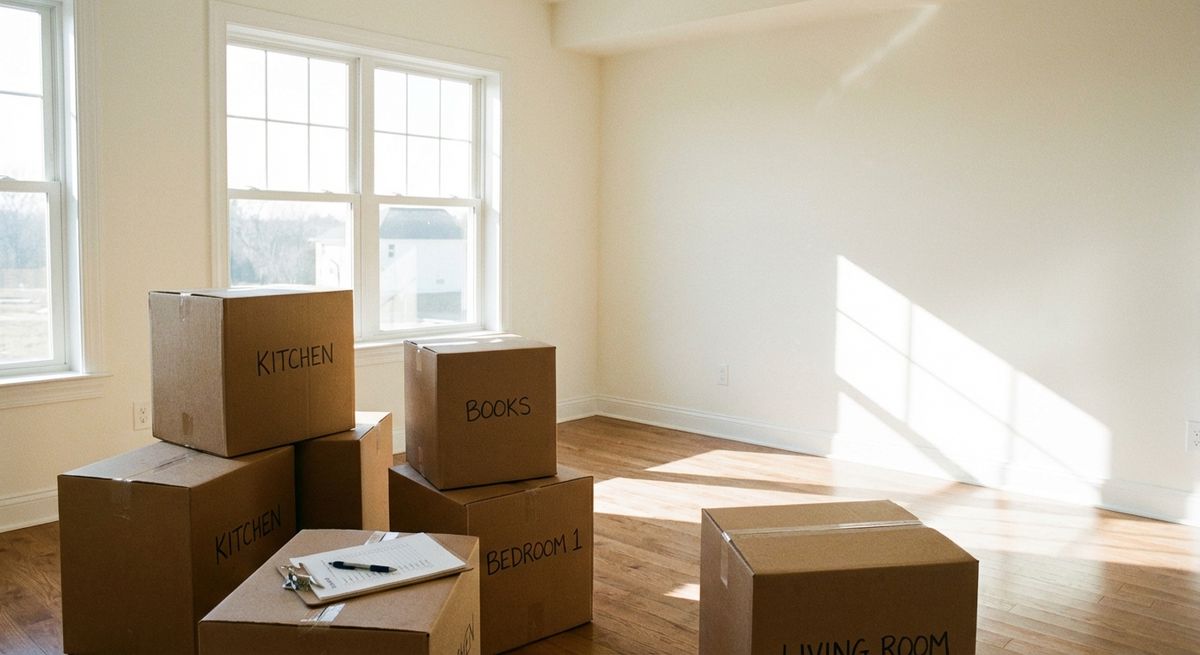
You're already touching everything you own. You're already making decisions about what to keep and what to donate. You're already thinking about the value of your possessions.
Moving is the perfect opportunity to create a home inventory.
Why Moving Season = Documentation Season
Why Moving Is the Best Time to Create a Home Inventory
Every year, about 26 million Americans move. Along with the boxes, tape, and tough decisions about what to keep, a move gives you a rare advantage: you’re about to touch nearly everything you own. That makes it the single easiest, most natural time to document your belongings for insurance, estate planning, and your own peace of mind.
Most people never build a home inventory because it feels like a huge, optional project. But during a move, you’re already sorting, deciding, and handling items you haven’t seen in years. Adding a quick layer of documentation on top of that existing work takes seconds—and can save you thousands of dollars and countless headaches later.
The Hidden Risk of Moving
Moves go wrong more often than you think. Research from the American Moving and Storage Association shows that roughly 1 in 4 people experience some kind of damage during a move—broken furniture, scratched appliances, shattered dishes, or missing boxes.
When that happens, you’ll want to file a claim. That’s where documentation becomes critical.
For interstate moves, federal law requires movers to offer liability coverage, but the default option—released value protection—only pays $0.60 per pound per item. That means:
- A 25-pound 50-inch TV destroyed in transit? You’d get $15.
- An 80-pound antique writing desk? $48.
You can upgrade to full value protection, which covers the actual replacement cost. But to be fully compensated, you need to prove:
- What you owned
- What condition it was in
- What it was worth
Without documentation, you’re stuck trying to remember what was in each box after the fact—often weeks later, under stress, in a new home. Was that missing box full of winter coats or vintage cameras? Memory alone is a weak foundation for a claim.
A home inventory created before you pack solves this. Photos, descriptions, and estimated values give you solid evidence. Instead of guessing, you can point to exactly what you lost and what it was worth.
Why Moving Makes Documentation Easier
Creating a home inventory when life is normal is hard. You have to:
- Walk room to room
- Open every drawer and closet
- Photograph and list items you barely notice anymore
It’s no surprise most people never do it.
Moving flips that script. You’re already:
- Emptying shelves
- Clearing drawers
- Packing every closet
The physical work is built in. All you add is a small documentation step:
- Snap a photo before something goes into a box
- Note condition and approximate value
- Capture serial numbers while items are accessible
According to census data, the average American moves 11.7 times in a lifetime. That’s 11.7 natural checkpoints to build and update a complete record of what you own—without carving out extra time.
What to Document (and What to Skip)
You don’t need to photograph every paperclip. Focus on what would matter most if it disappeared.
1. High-Value Items (Document Individually)
Prioritize:
- Electronics (TVs, laptops, tablets, cameras, gaming systems)
- Appliances (refrigerators, washers, dryers, high-end small appliances)
- Furniture (sofas, beds, desks, dining sets)
- Jewelry and watches
- Artwork and collectibles
- Musical instruments
For each item:
- Take clear photos from multiple angles
- Capture any existing damage or wear
- Note approximate value (purchase price and/or current replacement cost)
- Photograph receipts, appraisals, or certificates if you have them
- Record serial numbers for electronics and appliances
Serial numbers are often on the back, bottom, or inside panels—places you rarely check except during a move.
2. Everything Else (Use Video Walkthroughs)
For lower-value or numerous items, a room-by-room video walkthrough is usually enough:
- Slowly pan each room
- Open drawers, cabinets, and closets as you film
- Narrate what you’re seeing if helpful (e.g., “Top drawer: everyday utensils; bottom drawer: baking tools”)
A five-minute video of your kitchen or bedroom provides far more documentation than most households have today.
3. Don’t Forget Hidden Spaces
Include:
- Garage
- Basement
- Attic

Jackson White
2022年よりVaultTagの創業者兼CEO。家財管理技術と保険書類作成において3年以上の経験を持つ。マーシャル火災で多くの家族がかけがえのない財産を失うのを目の当たりにし、VaultTagを開発。包括的なデジタル記録化により数千人の住宅所有者の資産保護を支援し、保険専門家と緊密に連携して適切な補償確認を実現している。